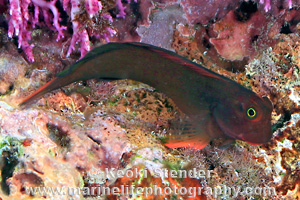
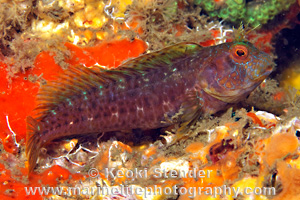
Family Blenniidae

Blennies

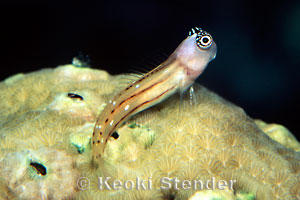
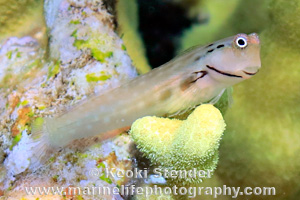
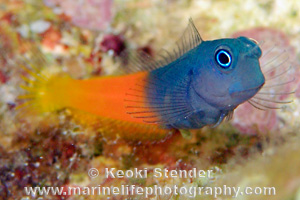
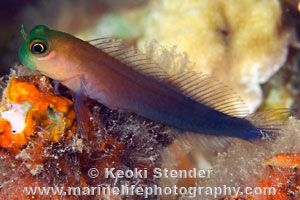
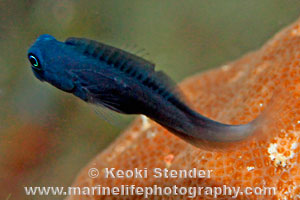
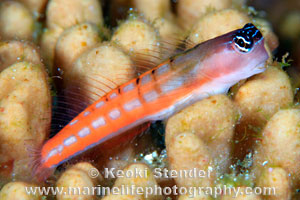
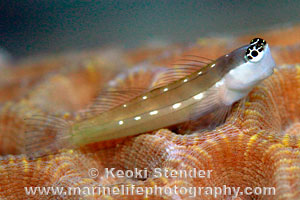
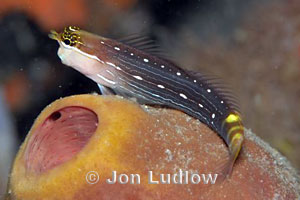
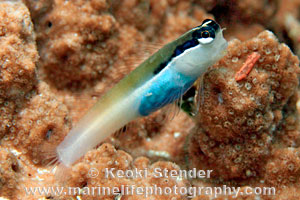
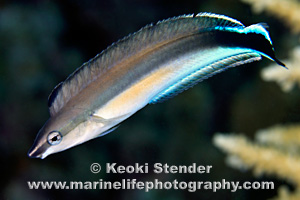
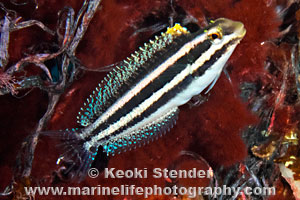
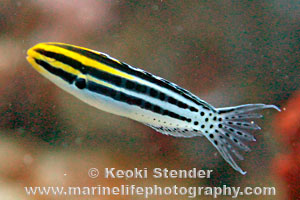
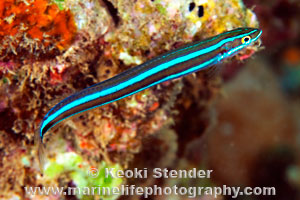
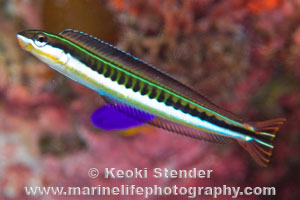
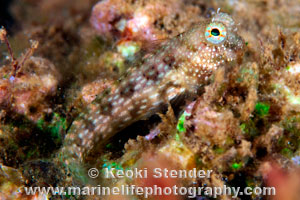
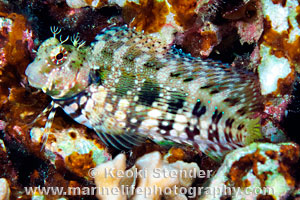
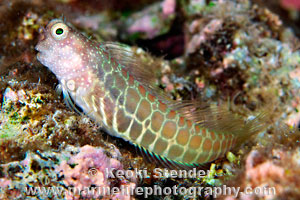
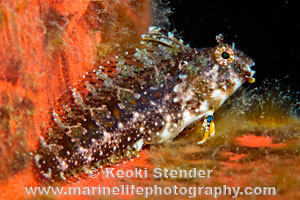
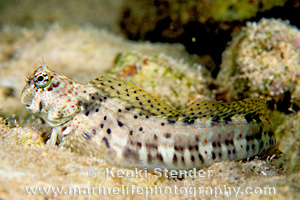
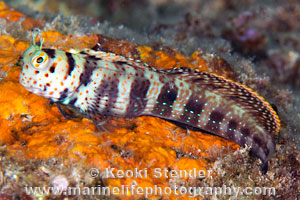
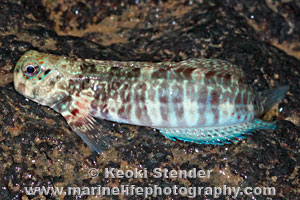
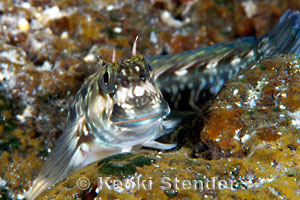
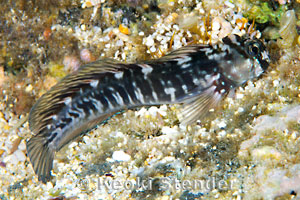
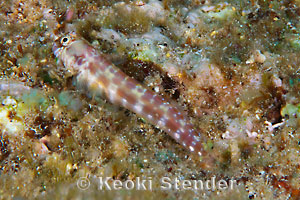
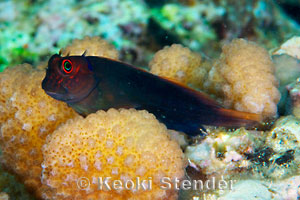
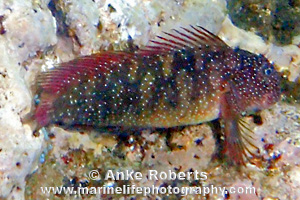
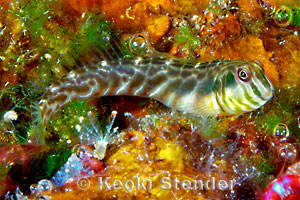
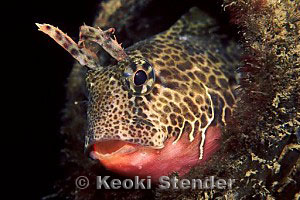
Blennies are common inhabitant of tidepools and reefs.  They have elongate bodies with long dorsal and anal fins, blunt foreheads, and small paired pelvic fins.  Most are herbivorous, using comb-like teeth to graze upon algal turfs but Plagiotremus are carnivorous, with large incisors that take chunks of flesh from unwary fish and the occasional diver.  Many species are cryptic or inhabit the surge zone.  Hawaiians called them Pao'o.


HAWAII

Blenniella gibbifrons    

Makapu'u tidepool, Oahu


Hanauma Bay, Oahu, 2 feet

Sharks Cove, Oahu, 3 feet


Sharks Cove, Oahu, 3 feet

Sharks Cove, Oahu, 3 feet

BULLETHEAD ROCKSKIPPER or BIGBROW BLENNIELLA

Common on shallow reefs living in empty vermetid tubes.  Base color green in females and gray with reddish brown in males.  Attains 5 inches.  Western Indian Ocean, Micronesia, and Hawaii.

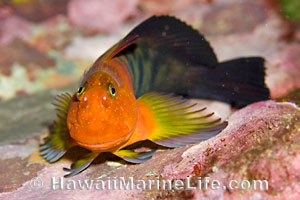
Cirripectes obscurus   

Portlock, Oahu, 5 feet

GARGANTUAN BLENNY

Endemic to Hawaii.  Inhabits shallow rocky reefs in the surge zone but rarely seen.  Purple-brown with tiny white speckles and males are orange during spawning.  Attains 8 inches.


Cirripectes vanderbilti   

Frigate Point, Midway Atoll, 40 feet


Firehouse, Oahu, 25 feet

Firehouse, Oahu, 25 feet

Portlock, Oahu, 5 feet

SCARFACE BLENNY

Endemic to Hawaii.  Very common on shallow reefs but darts into holes when approached.  Attains 4 inches.


Entomacrodus marmoratus   

Marbled Blenny, aquarium

Makapu'u tidepool, Oahu


Ft. Kamehemeha, Oahu, 1 foot

Makapu'u tidepool, Oahu


Diamond Head, Oahu

Guarding eggs, Kaupo tidepool, Oahu


Guarding eggs, Kaupo tidepool, Oahu

Kaupo tidepool, Oahu

MARBLED BLENNY

Endemic to Hawaii.  Common in the intertidal zone.  Observed on exposed rocks at night, possibly grazing upon algae.  Attains 6 inches.

Entomacrodus strasburgi   

Female, Pohoiki, Hawaii, 6 feet

STRASBURG'S BLENNY

Endemic to Hawaii.  Inhabits shallow rocky reefs in the surge zone.  Attains nearly 2 inches.  Photo by John Hoover.

Exallias brevis

Female, Kahe Point, Oahu, 20 feet


Male, Kahe Point, Oahu, 20 feet

Guarding eggs, Pearl & Hermes Reef, 40 feet

Male, Kahe Point, Oahu, 20 feet

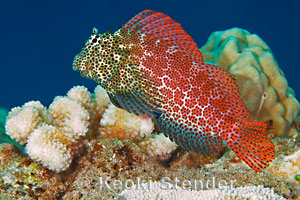
SHORTBODIED BLENNY

Deep body with brown spots, red in males.  Feeds and lays yellow eggs upon Lobe Coral or Porkchop Coral.  Attains 6 inches.  Indo-Pacific and Hawaii.


Istiblennius zebra   

Kapoho Point, Kailua, Oahu

Kapoho Point, Kailua, Oahu


Makapu'u tidepool, Oahu

Makapu'u tidepool, Oahu


Kaupo tidepool, Oahu


Kaupo tidepool, Oahu


Juvenile, Kapoho Point, Kailua, Oahu

ZEBRA BLENNY

Endemic to Hawaii.  Very common in the intertidal zone.  Elongate body with fleshy fins, flap on head, and banded gray or black.  Usually seen leaping from pool to pool when disturbed.  Attains 7.5 inches.


Omobranchus obliquus

Moku O Loe, Kaneohe Bay, Oahu, 2 feet

ROUNDHEAD or MANGROVE BLENNY

Uncommon on seaweed covered surfaces and mangroves in shallow water of Kaneohe Bay, Oahu.  Has numerous white chevrons on side.   Less than 2 inches.  Andaman Sea east to Samoa and the Line Islands.  Introduced to Hawaii accidentally in 1951.


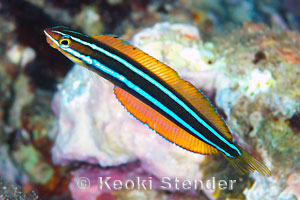
Plagiotremus ewaensis   

Waimanalo, Oahu, 20 feet

Palea Point, Oahu, 25 feet


Firehouse, Oahu, 25 feet

Ke'ei, Hawaii, 30 feet


NWHI coloration, Angel Ledge, Midway Atoll, 70 feet


NWHI coloration, Fish Hole, Midway Atoll, 40 feet

Waimea Bay, Oahu, 40 feet


Waimea Bay, Oahu, 40 feet

Lanai Lookout, Oahu, 45 feet

   EWA FANGBLENNY

Endemic to Hawaii.  Fish from the NW end of the chain are dark brown with less blue below.  Lives in vermetid snail tubes.  Pretends to be a cleaner wrasse and bites chunks out of other fishes.  Attains 4 inches.  Related to P. rhinorhynchos or the Indo-Pacific.


Plagiotremus goslinei   

Waimanalo, Oahu, 20 feet

Kaena Point, Oahu, 25 feet


Firehouse, Oahu, 25 feet


Waimea Bay, Oahu, 40 feet

Firehouse, Oahu, 20 feet


Firehouse, Oahu, 20 feet


Firehouse, Oahu, 20 feet

Firehouse, Oahu, 20 feet

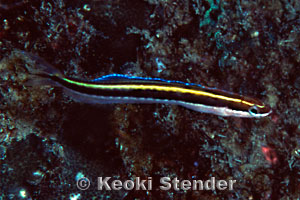
GOSLINE'S FANGBLENNY

Endemic to Hawaii.  Lives in vermetid snail tubes.  Pretends to be a cleaner wrasse and bites chunks out of other fishes.  Attains 4 inches.  Related to P. tapeinosoma of the Indo-Pacific.


Family Tripterygiidae

Triplefin Blennies

Triplefins are similar in appearance to Gobies and Blennies but have three dorsal fins and the mouth tapers to a point.  They are not easily spotted because of the small size and cryptic coloration.  They eat algae and small invertebrates.


HAWAII

Enneapterygius atriceps   

Makai Pier, Oahu, 10 feet

Pupukea tidepool, Oahu


Hanauma Bay, Oahu, 3 feet


Kaloko, Oahu, 2 feet

Hanauma Bay, Oahu, 3 feet

 HAWAIIAN TRIPLEFIN

Endemic to Hawaii.  Common on reefs with algal growth but difficult to see.  Only 1 inch long.  Males are reddish with a dark head, females green with light blotches.


INDO-PACIFIC

Blennies


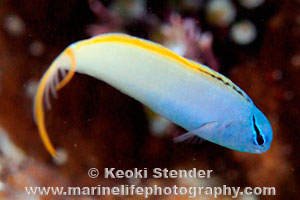
Plagiotremus rhinorhynchos

BLUESTRIPED FANGBLENNY

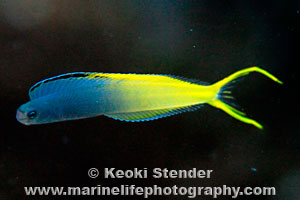
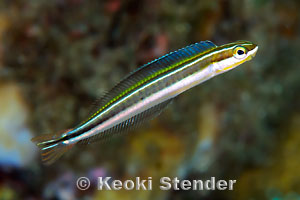
Plagiotremus tapeinosoma

PIANO FANGBLENNY

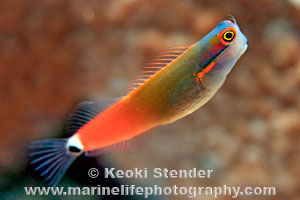
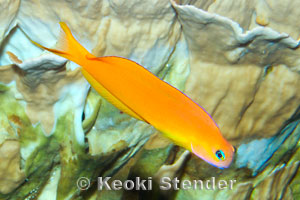
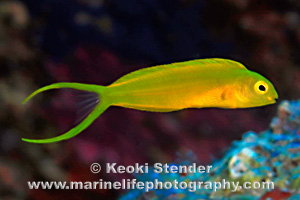
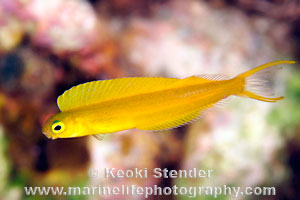
Ecsenius midas

Waikiki Aquarium

MIDAS BLENNY

Feeds upon zooplankton in the water column above coral reefs in the company of anthias or damselfishes of similar color.  May be yellow-orange or blue-gray.  Attains 5 inches.  Red Sea to the Marquesas.

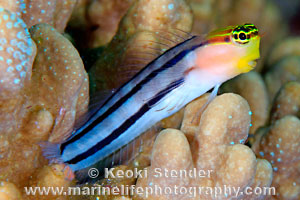
Ecsenius trilineatus

Wakatobi, Indonesia

THREE-LINED BLENNY

Inhabits the surge zone.  Attains 1.5 inch.  Indonesia to the Solomons.


Indo-Pacific Triplefins

Helcogramma spp.

Wakatobi, Indonesia, 60 feet

TRIPLEFIN


Family Pholidichthyidae

 Zebra Blenny


Pholidichthys leucotaenia

Wakatobi, Indonesia, 40 feet

Wakatobi, Indonesia, 40 feet

ZEBRA BLENNY

Schools of juveniles are locally common under ledges at scuba depth but adults remain deep within the reef.  Juveniles about 2 inches, adults up to 14 inches.  Indonesia, Philippines, New Guinea, Solomons.


EASTERN PACIFIC

 Blennies


Hypsoblennius gentilis   

Rainbow Harbor, Long Beach, California, 4 feet

BAY BLENNY

Occasional in quiet shoreline areas including estuaries.  Up to 6 inches.  Monterey Bay south to the Sea of Cortez.


Plagiotremus azaleus   

Cabo Pulmo, Baja California, 25 feet

PANAMIC FANGBLENNY

Lives in vermetid snail tubes.  Pretends to be a wrasse and bites chunks out of other fishes.  Attains 4 inches.  Sea of Cortez to Peru and the Galapagos.  Related to P. tapeinosoma of the Indo-Pacific.


Eastern Pacific Triplefins


Enneactes carminalis   

Cabo Pulmo, Baja California, 25 feet

CARMINE TRIPLEFIN

Common in shallow rocky areas with seaweeds.  About 1.5 inches.  Baja California to Panama.


Crocodilichthys gracilis   

Cabo San Lucas, Baja California, 25 feet

LIZARD TRIPLEFIN

Endemic to the Sea of Cortez, Mexico.  Rocky reefs and dropoffs.  About 2.5 inches.


Family Chaenopsidae

Tube Blennies

Carnivorous fishes that inhabit empty worm or bivalve shells or barnacles.  Family restricted to the Americas.


Acanthemblemaria crockeri   

Cabo Pulmo, Baja California, 15 feet

BROWNCHEEK BLENNY

Endemic to the Sea of Cortez.  Inhabits worm shells tubes to at least 200 feet.  About 2.5 inches


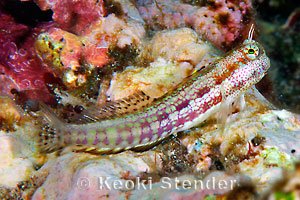
Acanthemblemaria macrospilus   

Cabo Pulmo, Baja California, 15 feet

Cabo Pulmo, Baja California, 5 feet


Cabo Pulmo, Baja California, 5 feet

BARNACLE BLENNY

Inhabits empty barnacles or worm shells to 50 feet.  Southern Baja to Acapulco and the Revillagigedos.  About 2.5 inches.


Family Labrisomidae

Weed Blennies

Deep-bodied carnivores that inhabit weedy rocky reefs in shallow water.


Malacoctenus gigas   

Cabo Pulmo, Baja California, 5 feet

SONORA BLENNY

Endemic to the Sea of Cortez.  Found on shallow seaweed covered reefs.  About 5 inches.


Malacoctenus hubbsi   

Cabo Pulmo, Baja California, 5 feet

REDSIDE BLENNY

Found in shallow rocky areas.  About 4 inches.  Sea of Cortez to Acapulco, Mexico.  


Text and photographs are copyrighted property of Keoki and Yuko Stender unless otherwise indicated.  No part of this website may be used without permission of the authors.  Images may not be used for any purpose without express permission of the photographers.