|
| |
Phylum
Mollusca
Class
Gastropoda
Family
Conidae
Cone
Shells
|
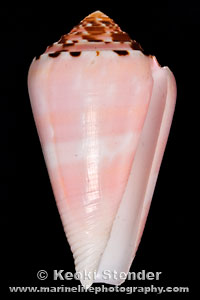
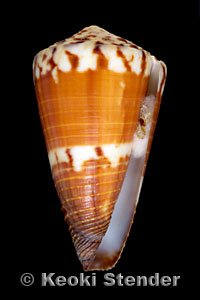
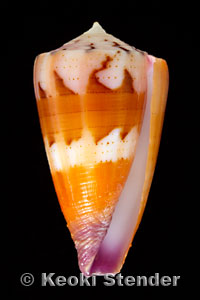
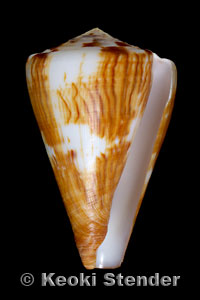
Cone shells are well-known since they
possess a powerful sting used to capture prey. Unfortunately some humans
have been fatally wounded when incorrectly handling live cones,
especially those that feed upon mollusks and fishes. The least
dangerous method is to hold the shell at the widest point and be prepared to let
go if the animal extends itself. Cones are prey-specific, feeding upon
worms, mollusks, or small fish, those that eat worms having the weakest
venom. The sting comes from a hollow harpoon dart called the radula.
It is rapidly thrust into living prey by the extensible mouth or proboscis and
venom is pumped into the wound and more radulae may employed until it
dies. Then it can be swallowed by expanding the proboscis much like
a snake would swallow its prey. The barbed radula also assists in pulling
prey into the mouth.
|
|
A living cone animal has a long foot
and the head is located at the narrow end of the shell. A flap of tissue
called the mantle lines the inside of the shell and is rolled to form a siphon
that extends beyond the shell and draws water into the gills. The
often-banded siphon is mistaken by observers for the stinging proboscis which is
normally retracted and of a single color. Each species' soft-parts
has a distinct color pattern allowing experienced divers to identify it even if
the shell is totally encrusted with algae.
|
|
There are at least 500 species in the world's warm
waters and are very popular with shell collectors, but living shells are
well-camouflaged or buried in sand. While living the shell is covered with
a brown skin-like periostracum which is the foundation for shell
development. The periostracum in turn becomes encrusted with coralline algae in species that do not completely bury themselves. It
can be removed by soaking the empty shell in chlorine bleach overnight and
scrubbing with a stainless steel wire brush. Living shells often become
eroded or chipped and permanent scars are visible. There is a considerable
degree of variation in the coloration and pattern within some species (see Conus
pulicarius). Many species also have a bumpy or coronated spire.
|
| Note: similar species are grouped together for convenience |
What does it eat?
HAWAII
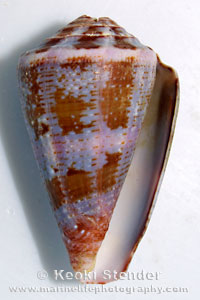
Conus abbreviatus 
Makapu'u Tidepool, Oahu |
|
|
|
|
|
|
|
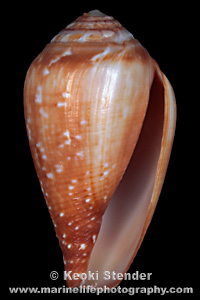
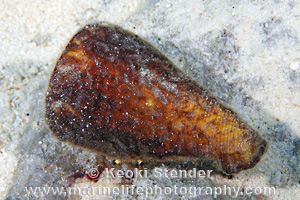
ABBREVIATED CONE
| Common on reefs and tidepools
to 60 feet. Endemic to Hawaii. Shell is tan, olive, or gray with small brown
dots and coronated spire. Attains 2 inches. Animal is tan with pink siphon. |

Conus coronatus
CROWN CONE
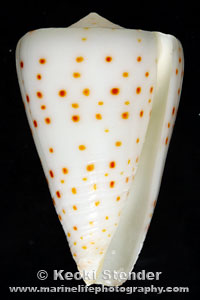
| Very rare in Hawaii on benches and shallow reefs,
but common throughout the Indo- Pacific. Spiral pattern of brown & white dashes instead of
dots in C. abbreviatus. Attains 1.5 inches. |

Conus catus
|
Makapu'u tidepool, Oahu
|
Makapu'u tidepool, Oahu
|
Makapu'u tidepool, Oahu |
|
|
|
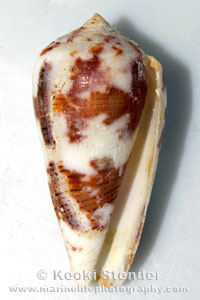
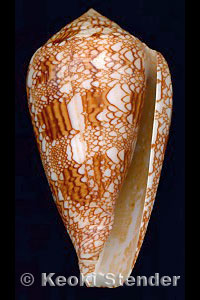
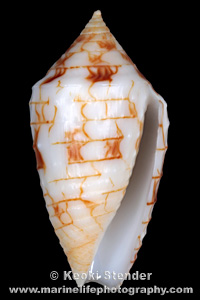
CAT CONE
| Uncommon in tidepools and reef benches.
Spirally grooved shell is brown with white flame-like
markings and spiral dashes. Attains 1.5 inches. Feeds upon gobies & blennies at night.
Animal is brown. Hawaii & the Indo-Pacific. |
Conus chaldaeus
|
Makapu'u tidepool, Oahu |
|
|
|
|
|
|
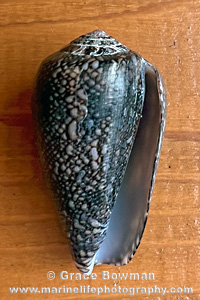
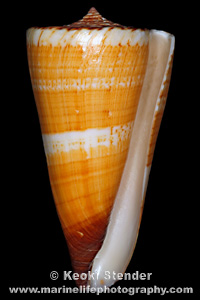
CHALDEAN CONE
| Fairly common on very shallow reefs and in tidepools.
A thick shell with granular spirals and coronated
spire, black with white
axial streaks. Attains 1 inch. Animal is striped black and tan and siphon has a red
tip. Hawaii & the Indo-Pacific. |

Conus ebraeus
Laying eggs, Kapoho Tidepool, Hawaii, 3 feet
|
|
Makapu'u tidepool, Oahu |
Kapoho tidepool, Hawaii |
|
|
|
|
HEBREW CONE
| Common on shallow reefs and
tidepools. Attains largest size in Hawaii, about 3 inches. Black polygons vary considerably among individuals.
Spire is lightly coronated. Animal is striped black and tan and siphon has a red
tip. Hawaii & the Indo-Pacific. |

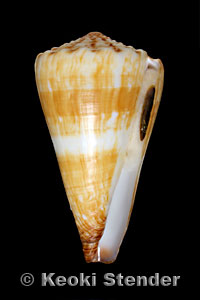
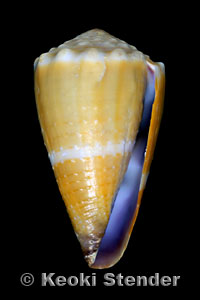
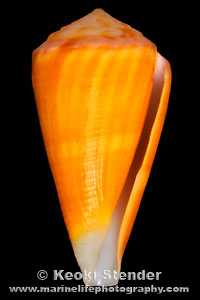
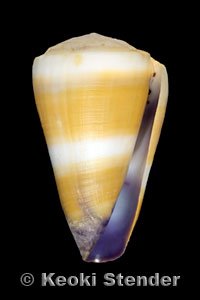
Conus flavidus
GOLDEN-YELLOW CONE
| Common on reefs, tidepools, and sand pockets
to 15 feet. Spire is low and smooth, aperture purple. Shell is golden yellow with white midbody spiral and
purple base. Attains 2.5 inches. Animal is tan mottled with brown, siphon banded with
black and yellow. Hawaii & the Indo-Pacific. |

Conus frigidus
FRIGID CONE
| Extremely rare in shallow water in Hawaii; uncommon in the
western Pacific. Smooth spire and last whorl has beaded spirals.
Attains 1.5 inches. |

Conus lividus
|
Makapu'u, Oahu, 3 feet
|
Ft. Kamehemeha, Oahu, 3 feet
|
Ft. Kamehemeha, Oahu, 3 feet |
Makapu'u tidepool, Oahu |
|
|
|
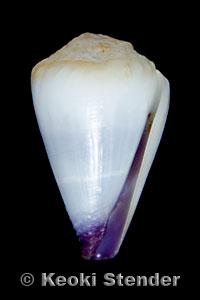
OLIVE-GREEN CONE
| Abundant on shallow reefs and in tidepools.
Spire is coronated and body whorl often with beaded spirals
toward base. Color is olive to orange-brown with faint mid-body
spiral. Attains 3.5 inches. Animal is reddish black.
Hawaii & the Indo-Pacific. |

Conus moreleti
MORELET'S CONE
| Common on reefs from 15 to
60 feet. A smooth and slender olive green shell without light
mid-body spiral or granules. Spire is low and bumpy. Attains 2 inches.
Animal is reddish brown with distinctive orange,
yellow, and black markings. Sometimes confused with the much heavier Conus
lividus. Hawaii & the Indo-Pacific. |

Conus distans
Adult
|
Juvenile |
Kahe Point, Oahu, 20 feet
|
Kahe Point, Oahu, 20 feet |
Waimanalo, Oahu, 20 feet |
|
|
|
DISTANTLY-LINED CONE
| Locally common on reefs in the surf zone to 20 feet.
Large species (5 inches) with slightly concave sides
and coronated spire. Thick periostracum often has spiral tufts. Shell is dirty cream to tan with purple base.
Animal is tan to brown. Hawaii & the Indo-Pacific. |

Conus spiceri 
SPICER'S CONE
| Rare in sand pockets or under rocks, locally
common at Midway. Elongate, solid shell light yellow, aperture white,
spire flat and smooth. Animal is brown with yellow head, siphon banded with
black & white. Attains 5 inches. Endemic to Hawaii. |

Conus quercinus
|
Haleiwa, Oahu, 30 feet
|
Juvenile, Kahe Point, Oahu, 40 feet
|
Kewalo, Oahu, 50 feet |
|
|
|
OAK CONE
| Locally common in sand or mud
to at least 250 feet. Juveniles prefer deep water. Shell broad and heavy in adults, spire smooth with
concave profile tapering to sharp point. Periostracum thick in adults.
Color cream or yellow with fine spirals of brown most
prominent in juveniles. Attainss 5 inches. Animal tan or brown mottled with black.
Hawaii & the Indo-Pacific. |

Conus leopardus
|
Juvenile, Midway Lagoon, 20 feet
|
Hanauma Bay, Oahu, 25 feet
|
Ft. Kamehameha, Oahu, 3 feet |
Ft. Kamehameha, Oahu, 3 feet
|
Ft. Kamehameha, Oahu, 3 feet |
|
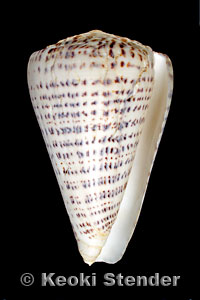
LEOPARD CONE
| Locally common and found partially buried on sandy
reefs to 60 feet. Attains 10 inches. Large shells lose their spots.
Spire is smooth, periostracum thick in adults. Animal is mottled tan and brown.
Hawaii & the Indo-Pacific. |

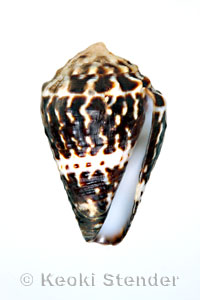
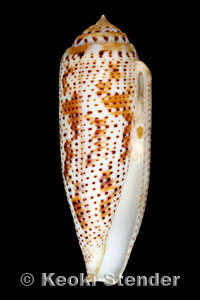
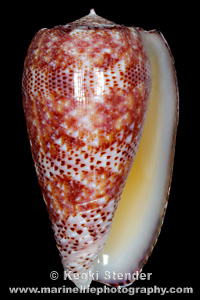
Conus pulicarius
|
Haleiwa Trench, Oahu, 70 feet
|
Sharks Cove, Oahu, 40 feet
|
Sharks Cove, Oahu, 40 feet |
Sea Tiger, Oahu, 120 feet |
|
|
|
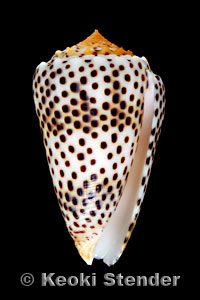
FLEA CONE
| Juveniles are abundant in sand adjacent to
reefs at scuba depths. Large adults are uncommon in shallow
water. Easily found by
following tracks created as they crawl through the sand. Spire is
coronated, flat or tall and conical. Pattern and number of black spots varies considerably
among individuals. Attains 3.5 inches. Hawaii & the
Indo-Pacific. |

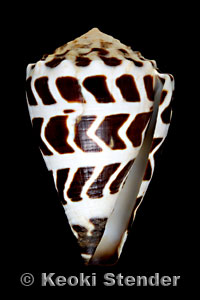
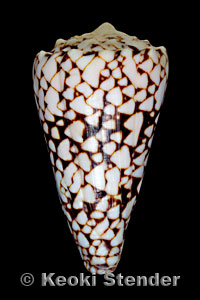
Conus marmoreus
bandanensis
|
Kea`au, Oahu, 50 feet |
|
|
|
|
|
|
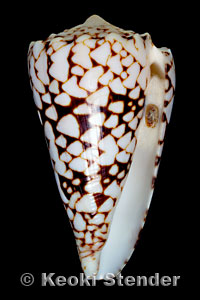
HAWAIIAN MARBLED CONE
| Uncommon on hard reef or buried in sand pockets
to 300 feet. Spire is flat and coronated. Black tented pattern on white shell.
Feeds upon other species of cone shells. Animal is tan with brown mottling.
Attains 5 inches. Has a potentially lethal sting. Endemic
Hawaiian subspecies. |

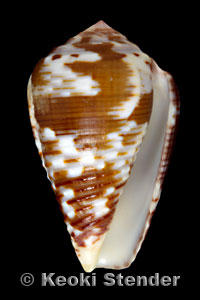
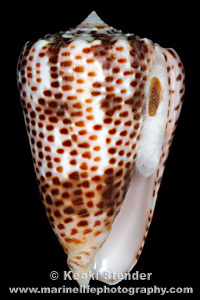
Conus pennaceus
PENNIFORM CONE
| Common in sand under rocks in
tidepools to depths of 15 feet. White with reddish brown tented pattern, spire is flat
to conical. Coloration, pattern, and shell shape varies among
individuals. Juveniles settle where they hatch unlike most cones.
Attains 3 inches. Animal is tan with brown mottling, siphon is tipped
with red, white and black. Hawaii & the Indo-Pacific. |

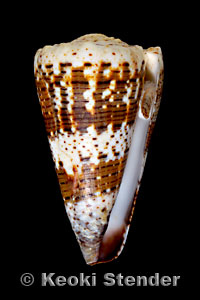
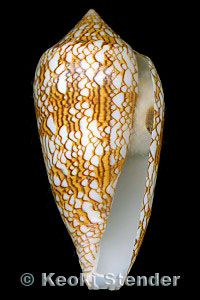
Conus textile
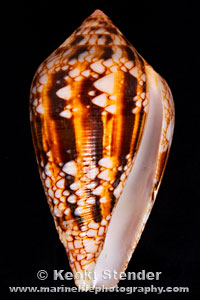
TEXTILE CONE
| Uncommon in sand under slabs at scuba depths.
Shell is light with concave spire, white with golden
blotches and dark brown tented pattern. Attains 4 inches. Feeds upon cowries and other snails at night,
sting
is potentially lethal to humans. Hawaii & the Indo-Pacific. |

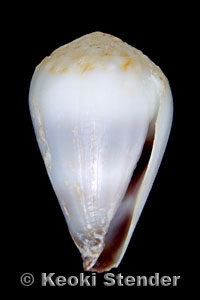
Conus retifer
RETIFER CONE
| Rare in sand under slabs
deeper than 30 feet. Fairly common
at Midway. Inflated heavy shell, pinkish white with golden
blotches and black tented pattern, aperture lavender. Attains 3 inches.
Feeds upon snails,
venom may be
dangerous. Hawaii & the tropical Pacific. |

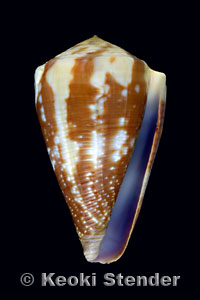
Conus circumactus
CIRCUMACTUS CONE
| Rare in sand under slabs
deeper than 50 feet. Pinkish white with two flame-like orange brown spirals
and brown flecks on the spire, base violet. Attains 2 inches.
Hawaii & the tropical Pacific. |

Conus vitulinus
Kewalo, Oahu, 35 feet
|
Kewalo, Oahu, 35 feet
|
|
|
|
|
|
|
CALF CONE
| Locally common on sandy reefs
to 130 feet. Glossy brown with irregular white mid-body spiral,
spire white with brown marks. Spire flat with spiral grooves. Animal is bright yellow, periostracum has fine spiral
ridges. Attains 2.5 inches. Hawaii & the Indo-Pacific. |

Conus litoglyphus
HIEROGLYPHIC CONE
| Uncommon on reefs
from 30 to 200 feet. Shell is rusty brown or tan with dark
tip and white splashes, spire is smooth. Attains 2 inches. Animal is olive green with black
mottling. Hawaii & the Indo-Pacific. |

Conus pertusus
PERFORATED CONE
| Fairly common in dead coral
from 45 to 300 feet. Shell lightweight, salmon to maroon with white spire
and broken midbody spiral. Attains 1.5 inches. Animal is light yellow with black speckles.
Hawaii & the tropical Pacific. |

Conus vexillum
|

Ft. Kamehemeha, Oahu, 3 feet
|
Ft. Kamehemeha, Oahu, 3 feet
|
Ft. Kamehemeha, Oahu, 3 feet |
|
|
|
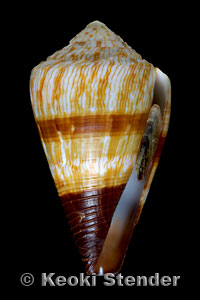
FLAG CONE
| Uncommon on reefs. Shell broad but quite thin, spire is low and smooth.
White and golden brown (juvenile olive) with irregular brown axial lines
and brown base, aperture white. Animal is greenish black. Reaches 5 inches. |
Conus rattus
|
Kapoho tidepool, Hawaii, 3 feet
|
Haleiwa Trench, Oahu, 25 feet
|
Kaupo Bay, Oahu, 6 feet |
Kaupo Bay, Oahu, 6 feet
|
Diamond Head, Oahu |
Kapoho tidepool, Hawaii |
|
|
RAT CONE
| Fairly common on shallow reefs and tidepools.
Spire smooth, shell glossy, olive brown with white
blotches and dots, aperture purple and white. Attains 2.5 inches.
Animal is greenish black. Hawaii & the Indo-Pacific. |

Conus miles
|
Kahala, Oahu, 40 feet
|
Ft. Kamehemeha, Oahu, 3 feet
|
Ft. Kamehemeha, Oahu, 3 feet |
|
|
|
SOLDIER CONE
| Locally common on reefs to
100 feet. Alternating bands of cream and brown with black base
and fine wavy brown lines. Aperture is purple and white. Attains 3 inches.
Animal is greenish black. Hawaii & the Indo-Pacific. |

Conus imperialis
|
Juvenile, Sharks Cove, Oahu, 30 feet
|
Blowhole, Oahu, 35 feet |
Puako, Hawaii, 30 feet |
|
|
|
|
IMPERIAL CONE
| Uncommon on reefs to 100
feet. Attains 4 inches. Shell is gray with brown blotches and black & white
spiral dashes, spire is coronated. Animal is red. Hawaii &
the Indo-Pacific. |

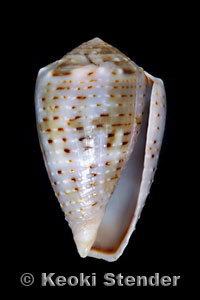
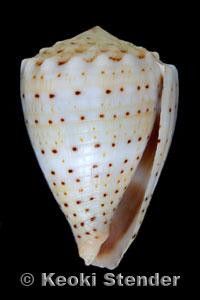
Conus sponsalis
|
Makapu'u tidepool, Oahu
|
Makapu'u tidepool, Oahu |
|
|
|
|
|
CEYLON CONE
| Abundant on intertidal benches,
tidepools, and reefs. Shell white with brown flecks, base purple, and
coronated spire. Attains 3/4 inch. Animal is pink and white.
Hawaii & the Indo-Pacific. |

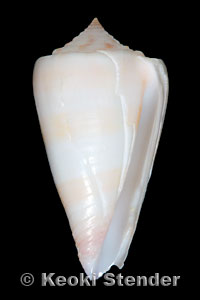
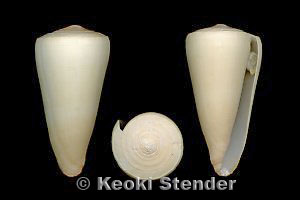
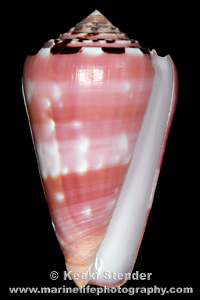
Conus suturatus
sandwichensis 
HAWAIIAN SUTURED CONE
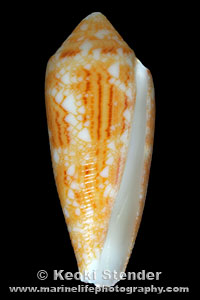
| Rare in sand at scuba depths.
Glossy white with wide pink to orange spirals and a few
brown marks on the spire, narrow aperture is white. Reaches 1.5 inches.
Endemic Hawaiian subspecies. |

Conus nussatella
|
Haleiwa Trench, Oahu, 80 feet |
|
|
|
|
|
|
NUSSATELLA CONE
| Rare in silt under stone
& rubble at scuba depths. Feeds upon other snails. Attains 3 inches.
Animal is light brown. Hawaii & the Indo-Pacific. |

Conus obscurus
|
Kahe Point, Oahu, 25 feet
|
Kewalo Hump, Oahu, 90 feet
|
Kewalo Hump, Oahu, 90 feet |
|
|
|
DUSKY CONE
| Fairly common in sand under
stones or within dead coral at scuba depths. Thin purplish-gray shell with brown blotches and
flaring aperture. Attains 1 inch. Feeds upon small fishes,
sting
may be dangerous. Animal is flesh-colored with brown markings.
Hawaii & the tropical Pacific. |

Conus striatus
|
Kaena Point, Oahu, 25 feet |
|
|
|
|
|
|
STRIATED CONE
| Uncommon in sand under coral
slabs at 20 to 60 feet, usually exposed at night. Elongate pinkish-white shell with brown or purplish
spirals forming flame-like axial streaks. Spire is low and spirally grooved.
Attains 5 inches. Animal is tan mottled with brown. Feeds upon sleeping reef fishes and
sting
is potentially lethal to humans. Hawaii & the Indo-Pacific. |

Conus acutangulus
SHARP-ANGLED CONE
| Uncommon in sand at 60 to
200 feet. Nearly biconic with prominent spiral cords. Attains 1 inch.
Hawaii & the tropical Pacific. |

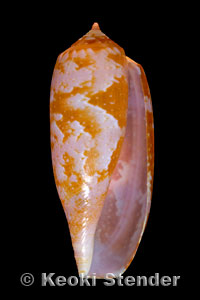
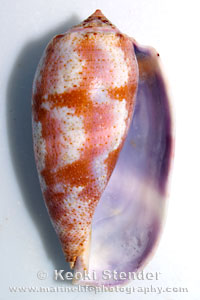
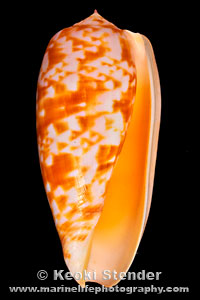
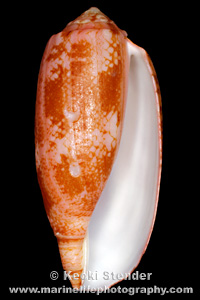
Conus bullatus
BUBBLE CONE
| Rare in deep water buried in sand, more often empty or
inhabited by a hermit crab. Shell solid and widest at mid-body and flaring
aperture, pink with cloudy orange brown spirals, aperture pinkish-orange.
Reaches 3 inches. |

INDO-PACIFIC
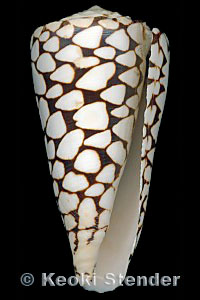
Conus marmoreus marmoreus
MARBLED CONE
| Uncommon on hard reef or buried in sand pockets
to 300 feet. Spire is flat and coronated. Black tented pattern on white shell.
Feeds upon other species of cone shells. Animal is tan with brown mottling.
Attains 5 inches. Has a potentially lethal sting.
Indo-Pacific. |

TROPICAL EASTERN PACIFIC
Conus dalli
DALL'S CONE
|