Seabirds

HAWAII

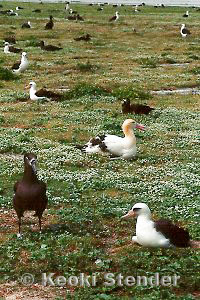
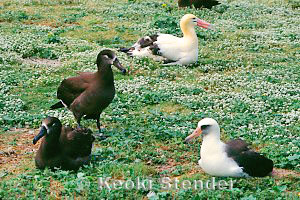
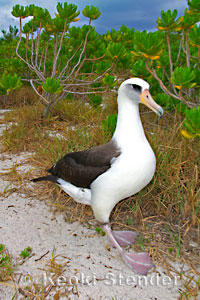
Hawaii's three albatross species at Midway Atoll.

The Albatross Project


Family Diomedeidae

Albatrosses

Phoebastria immutabilis    page

LAYSAN ALBATROSS    MOLI

Phoebastria nigripes    page

BLACK-FOOTED ALBATROSS    KA'UPU

Phoebastria albatrus  

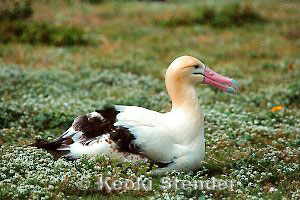
Short-tailed Albatross, Midway

Sand Island, Midway Atoll

SHORT-TAILED ALBATROSS

Approximately 2,350 nest on steep slopes of the tiny volcanic island of Tori-shima in Japan's Bonin Islands (near Iwo Jima).  A few birds visit Midway Atoll in the Northwestern Hawaiian Islands during winter & spring but successful breeding has yet to be recorded.  Feeds upon squid & small fishes, fish eggs, & carrion in the North Pacific.  A endangered species due to the risk of an eruption destroying the entire breeding colony, as well as mortalities caused by interactions with longline fishing gear & ingestion of marine debris.  Special measures are taken by US vessels to reduce this threat.  New nests have become established on Senkaku & Ogasawara Islands.

State of Hawaii DLNR Factsheet


Family Procellariidae

Petrels & Shearwaters

Puffinus pacificus 

Popoi'a Island, Kailua, Oahu


Haleiwa, Oahu, Hawaii


Kaena Point, Oahu

 WEDGE-TAILED SHEARWATER    'UA'U KANI

Common throughout the Hawaiian Islands.  Nests in burrows or crevices during summer-fall.  Calls resemble moaning or crying.  Highly susceptible to predation by animals & careless humans who trample or destroy burrows.  Fledglings prone to disorientation by lights onshore, causing them to eventually crash into structures or be hit by cars.

State of Hawaii DLNR Factsheet

Pterodroma hypoleuca

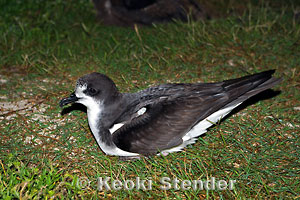
Bonin Petrel, Midway

Sand Island, Midway Atoll

BONIN PETREL

Nests in sandy burrows of the Northwestern Hawaiian Islands.  Thousands of birds become active after dusk as they depart to feed upon small fishes or squid plucked from the sea surface as they skim across the surface.  They share the same burrows used by Wedge-tailed Shearwaters during summer-fall, nesting during winter-spring after young shearwaters fledge.  

State of Hawaii DLNR Factsheet

Family Hydrobatidae

Storm Petrels

Oceanodroma leucorhoa 

Waimanalo Beach, Oahu

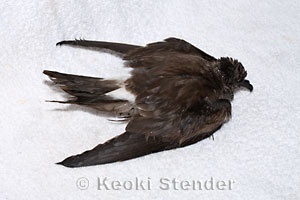
 LEACH'S STORM-PETREL

Rarely seen near shore during winter storms.  Feeds on zooplankton by pattering (walking on the ocean's surface while hovering).  Dark brown with with more or less interrupted white band on rump, tail forked.  The more common (in Hawaii) Band-rumped Storm Petrel has a broad rectangular white band and slightly forked tail.  Wingspan 18 inches, length 8 inches.  Nests on offshore islands of the Northern Pacific rim, common in the North Atlantic.

Photos of weak bird rescued from surf during strong NE winds, 3/7/2010

http://www.seattleaudubon.org/birdweb/bird_details.aspx?id=29

Family Fregatidae

Frigates

Fregata minor

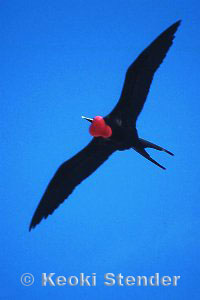
Male Great Frigate, Midway

Male, Eastern Island, Midway Atoll


Haleiwa, Oahu

Haleiwa, Oahu


Female, Frigate Point, Midway Atoll

Male, Frigate Point, Midway Atoll

GREAT FRIGATEBIRD    'IWA

Common around the Hawaiian Islands typically soaring high above the sea surface.  Unable to get wet, they feed by stealing prey from other birds and raiding nests.  Males inflate a large red throat pouch during courtship.

State of Hawaii DLNR Factsheet

Family Sulidae

Gannets & Boobies

Sula leucogaster

Wai'anae, Oahu


Diamond Head, Oahu

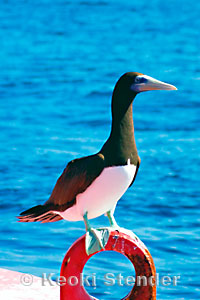
BROWN BOOBY    'A

Commonly sighted near shore.  Rests on buoys & channel markers.  Nests on the ground.

State of Hawaii DLNR Factsheet

Sula dactylatra

MASKED BOOBY    'A

Rare around the main Hawaiian Islands but frequent in the Northwestern Hawaiian Islands.  Nests on the ground.

State of Hawaii DLNR Factsheet

Sula sula

Red-footed Booby, Midway

Eastern Island, Midway Atoll

Makapu'u, Oahu

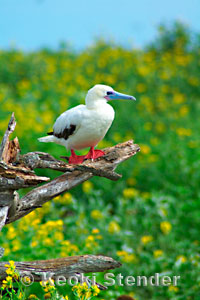
RED-FOOTED BOOBY    'A

A common species throughout Hawaii.  Nests on trees.

State of Hawaii DLNR Factsheet

Family Laridae

Terns, Gulls, & Noddies

Anous minutus

Lisianski Island, NWHI


Sand Island, Midway Atoll

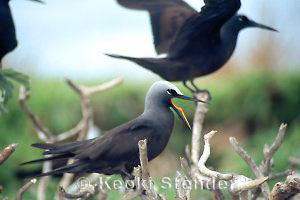
HAWAIIAN BLACK NODDY    NOIO

Fairly common along Hawaii's coast.  Smaller than the Brown Noddy, the white cap is more pronounced.  Nests on trees or crevices & sea caves.  Remains within sight of land.

State of Hawaii DLNR Factsheet


Anous stolidus

Frigate Point, Midway Atoll


Eastern Island, Midway Atoll


North Beach, Midway Atoll

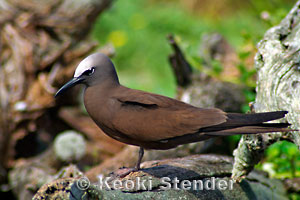
BROWN NODDY    NOIO KOHA

Uncommon around the Main Hawaiian Islands, common in the Northwestern Hawaiian Islands.  Somewhat larger than the Black Noddy.  Nests on the ground, trees, or manmade structures.  Remains within sight of land.

State of Hawaii DLNR Factsheet

Sterna fuscata

Eastern Island, Midway Atoll

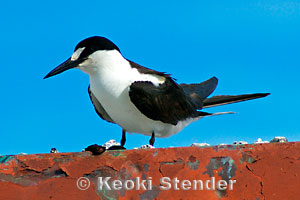
SOOTY TERN    'EWA'EWA

Common during winter & spring nesting season around the Hawaiian Islands.  Nests on the ground.  Adults travel far from land to forage and may remain airborne for years.

State of Hawaii DLNR Factsheet

Sterna lunata

Gray-backed Tern, Eastern Island, Midway Atoll

Eastern Island, Midway Atoll

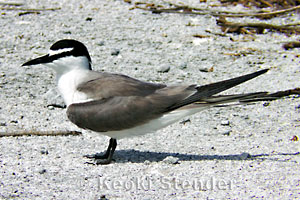
GRAY-BACKED TERN    PAKALAKALA

Quite rare in the Northwestern Hawaiian Islands.  Nests on the ground.  Biology similar to Sooty Tern.

State of Hawaii DLNR Factsheet


Gygis alba

White Tern & chick, Lisianski Island

Lisianski Island, NWHI


Midway Atoll

Eastern Island, Midway Atoll


Boat House, Midway Atoll

Boat House, Midway Atoll

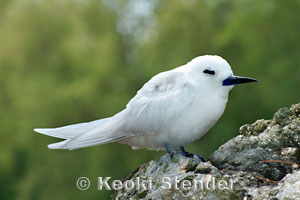
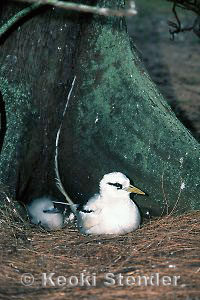
WHITE or FAIRY TERN    MANU-O-KU

Common throughout the Hawaiian Islands.  Nests in large trees, especially Monkeypods around Honolulu, where it is the official city bird.  Will also nest on manmade structures.

State of Hawaii DLNR Factsheet

Family Phaethontidae

Tropicbirds

 Phaethon rubricauda

Red-tailed Tropicbird, Midway

Midway Atoll


SE Oahu


SE Oahu


North Beach, Midway Atoll


Boat House road, Midway Atoll

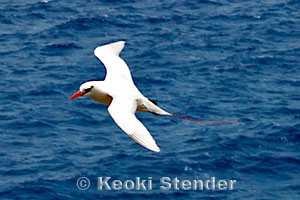
 RED-TAILED TROPICBIRD    KOA'E 'ULA

Uncommon around the Hawaiian Islands.  Nests in crevices of sea cliffs or vegetation in the absence of rocks & predators.  Bill is red.  Aerial courtship displays characterized by hovering & backward flight.

State of Hawaii DLNR Factsheet

Phaethon lepturus

White-tailed Tropicbird & chick, Midway

Sand Island, Midway Atoll

WHITE-TAILED TROPIC BIRD    KOA'E KEA

Uncommon around the Main Hawaiian Islands, nesting on cliffs in wet forest.  Rarely nests on trees in the NWHI.  Yellow bill.

State of Hawaii DLNR Factsheet

Family Stercorariidae

Skuas

Stercorarius pomarinus

Pomarine Jaeger, Mamala Bay, Oahu

Offshore of Diamond Head, Oahu

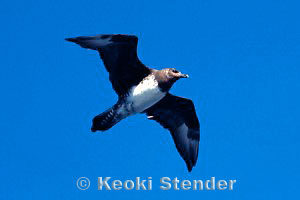
POMARINE JAEGER or GARBAGE BIRD

Uncommon around Hawaii during winter.  Follows large vessels to scavenge for food.

Birdweb Info


Shorebirds

HAWAII

Family Charadriidae

Pluvialis fulva

Winter Colors, Sandy Beach, Oahu

Winter Colors, Hanauma Bay, Oahu


Summer Colors, Hawaii Kai, Oahu

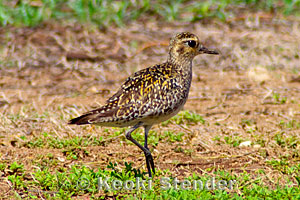
PACIFIC GOLDEN PLOVER    KOLEA

Common sight on lawns & grassy fields from August to April.  Nests in Arctic region during summer.  Tracking studies have found that they can fly at least 30 mph and cross the North Pacific in four days.

State of Hawaii DLNR Factsheet


Family Scolopacidae

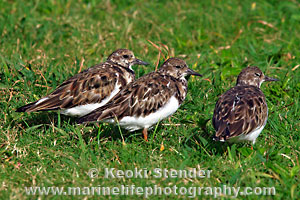
Arenaria interpres

Popoi'a Island, Kailua, Oahu


Mokumanamana (Necker Island)

RUDDY TURNSTONE    'AKEKEKE

Occasionally seen at the water's edge during winter months.  Often turns small rocks in search of food.  Nests in Arctic region during summer.  

State of Hawaii DLNR Factsheet


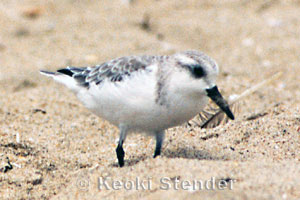
Calidris alba

Huntington Beach, California

SANDERLING    HUNAKAI

An uncommon winter visitor on sandy beaches where they run up & down the beach ahead of waves searching for crabs.  Common along coasts of North America.

State of Hawaii DLNR Factsheet

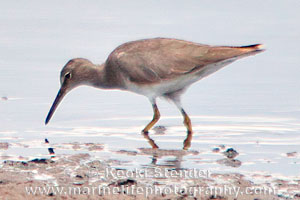
Tringa incanus

Kapoho Point, Kailua, Oahu

WANDERING TATTLER    'ULILI

Common near water during winter months.  Formerly known as Heteroscleus incanus.

State of Hawaii DLNR Factsheet

Numenius tahitiensis

BRISTLE-THIGHED CURLEW    KIOEA

Rare around the Main Hawaiian Islands but frequent in the NWHI.  Throws stones to break open albatross eggs.  A wary species.

State of Hawaii DLNR Factsheet


Water Birds

HAWAII

Family Ardeidae

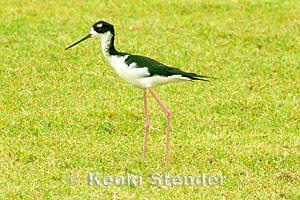
Himantopus mexicanus knudseni   

Sandy Beach, Oahu 

HAWAIIAN STILT    AE'O

An endangered subspecies, 2700 inhabit wetlands but may be seen foraging in open fields.  Endemic to Hawaii.

State of Hawaii DLNR Factsheet

Family Ardeidae

  Anas laysanensis 

Midway Atoll

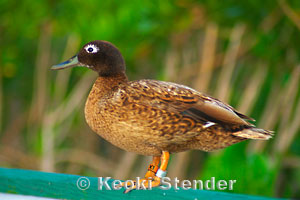
LAYSAN DUCK or TEAL

Critically endangered species, fewer than 200 now inhabit wetlands on Laysan Island & Midway Atoll in the NWHI.  Once extant throughout the Hawaiian Islands before human settlement, the entire population was reduced to a dozen on Laysan Island by 1911.  Subject of intensive rehabilitation by the USFWS in the NWHI.  Endemic to Hawaii.

http://en.wikipedia.org/wiki/Laysan_Duck

State of Hawaii DLNR Factsheet

Family Gallidae

Fulica alai   

HAWAIIAN COOT    'ALAE KE'O KE'O

An endangered species, 2000 - 4000 inhabit wetlands.  Endemic to Hawaii.

State of Hawaii DLNR Factsheet

Gallinula chloropus sandvicensis   

HAWAIIAN MOORHEN    'ALAE 'ULA

An endangered subspecies, 300 inhabit wetlands.  Endemic to Hawaii.

State of Hawaii DLNR Factsheet

Family Ardeidae

Nycticorax nycticorax hoactli

Kahe Point, Oahu

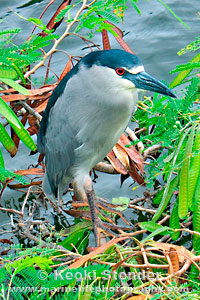
BLACK-CROWNED NIGHT HERON    'AUKU'U

Common along the water's edge, inland or coastal.  This subspecies occurs in the Main Hawaiian Islands & the Americas.

State of Hawaii DLNR Factsheet


Terrestrial Birds

HAWAII - ENDEMIC

Family Fringillidae

Telespiza cantans   

Pearl & Hermes Reef, NWHI 

LAYSAN FINCH

An aggressive endangered bird on Laysan Island & Pearl & Hermes Reef.

State of Hawaii DLNR Factsheet


HAWAII - INTRODUCED

Family Estrildidae

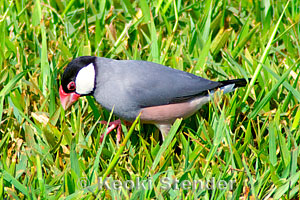
Padda oryzivora

Sandy Beach, Oahu

JAVA SPARROW    BUNCHO

Common at parks around Honolulu.  Native to and considered vulnerable in Java. 

http://www.birdlife.org/datazone/species/index.html?action=SpcHTMDetails.asp&sid=8734&m=0


NORTH AMERICA

Family Laridae

Larus glaucescens

Juveniles, Victoria, Canada

GLAUCUS-WINGED GULL

Most common gull of the Northeast Pacific.


Text and photographs are copyrighted property of Keoki and Yuko Stender unless otherwise indicated.  No part of this website may be used without permission of the authors.  Images may not be used for any purpose without express permission of the photographers.