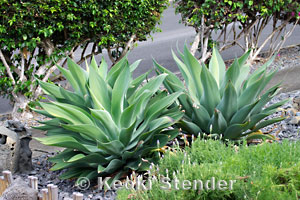

Family Agavaceae

Agave Family

HAWAII - POLYNESIAN INTRODUCTION

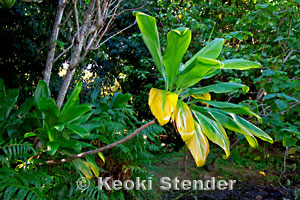
Cordyline fruticosa

Waimanalo, Oahu


UH Manoa, Oahu

Wa'ahila ridge, Oahu

TI PLANT, CABBAGE PALM    KI

Introduced to Hawaii by early Polynesians, occurring in mesic forests & valleys.  Numerous ornamental cultivars in gardens.  Culturally important throughout the Pacific.  Large green-leaf variety is the standard form.  Originally from SE Asia.  Sometimes included the Family Liliaceae.

http://www2.bishopmuseum.org/ethnobotanydb/resultsdetailed.asp?search=ki

http://en.wikipedia.org/wiki/Cordyline_fruticosa


 HAWAII - NATURALIZED

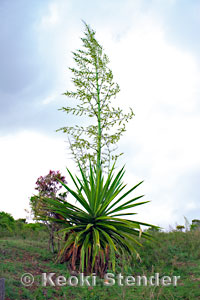
Furcraea foetida

Kanaio, Maui

MAURITIUS HEMP

Locally common & invasive in dry, rocky disturbed areas.  Leaves bright green with smooth edge.  Reproduces by young plants (bulbils) that develop after flowering.  Cultivated to produce fiber.  Native to South America.

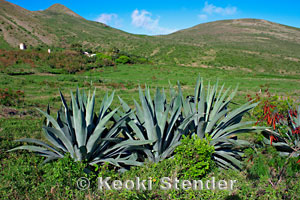
Agave sisalana

Auwahi, Maui

SISAL

Locally naturalized in dry, rocky disturbed areas.  Young leaves with bluish waxy coating, becoming dull green, edge smooth or with small prickles.  Flowering once after 8-20 years.  Cultivated to produce fiber.  Native to the Yucatan Peninsula.


HAWAII - CULTIVATED

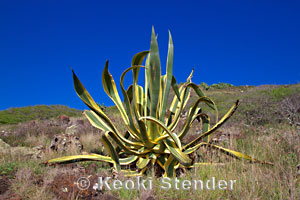
Agave americana

CENTURY PLANT or MAGUEY

Cultivated or garden escapes in dry areas.  Leaves with tendency to curl, blue-gray or striped, edge with stout prickles.  Flowering once after about 10 years.  Cultivated to produce fiber or as ornamentals.  Native to Mexico.


NORTH AMERICA - INDIGENOUS

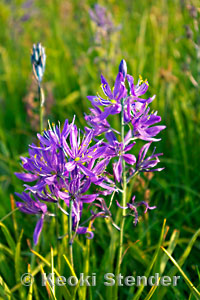
Camassia quamash

Victoria, BC, Canada

Victoria, BC, Canada

QUAMASH or SMALL CAMAS

Native to moist meadows from BC to northern California, Alberta & Wyoming.  Blooms in spring.  Bulbs are edible.


Text and photographs are copyrighted property of Keoki and Yuko Stender unless otherwise indicated.  No part of this website may be used without permission of the authors.  Images may not be used for any purpose without express permission of the photographers.